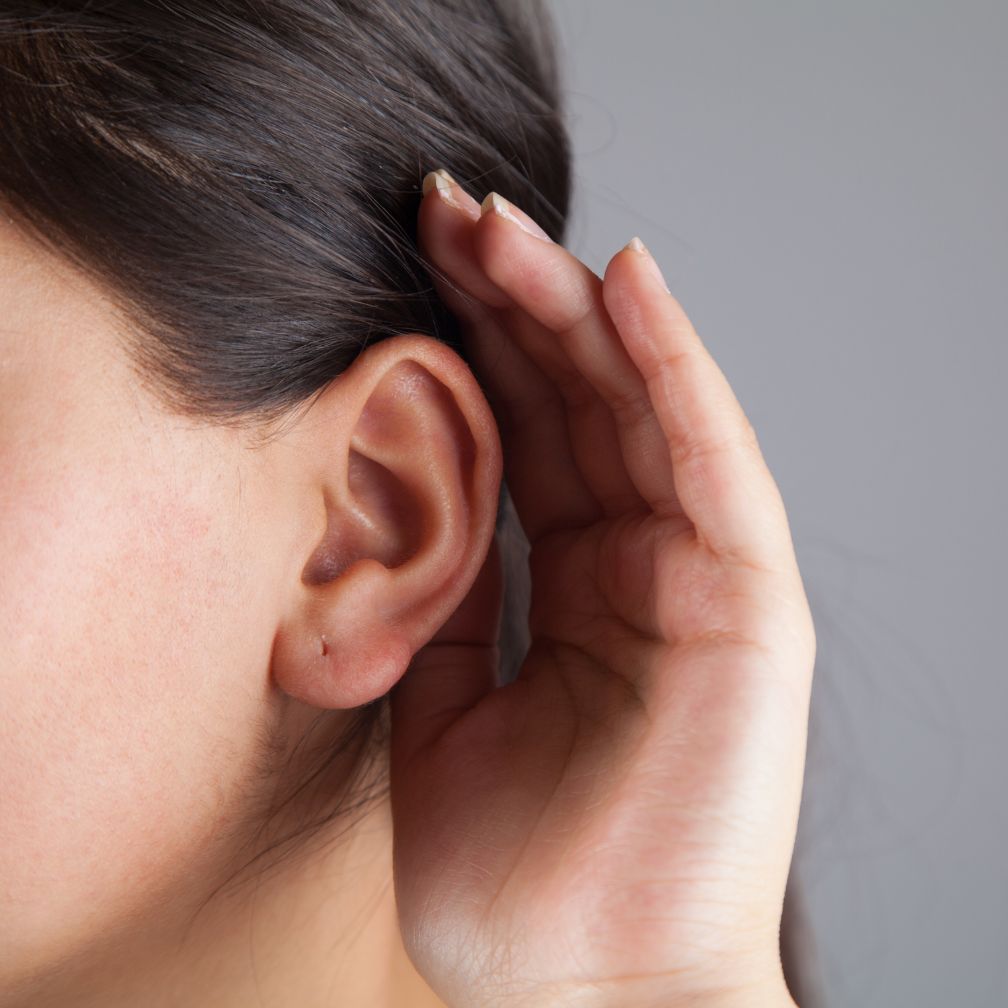
What’s that strange noise that kind of sounds like white noise, or wind in your ears? Why is this disruptive acoustic phenomenon completely silent to everyone else? It’s not your imagination.
Fortunately, it’s probably not “phantom ring syndrome,” a condition where people who use cell phones excessively think they hear their phone ring, buzz, or beep when no one’s calling or texting them.
In most clinical scenarios, this localized baseline static is a direct manifestation of tinnitus. To be perfectly clear, the frequency you are tracking is completely real, and specific environmental factors can actively exacerbate your tinnitus.
Even with this internal hum, your ears retain the capacity to process active human speech. Instead, it functions as an omnipresent layer of sensory noise transposed directly on top of your standard daily hearing.
We will examine why this persistent hum occurs, break down its clinical characteristics, and review what steps you can take to successfully alleviate the symptom.
Demystifying Tinnitus: Connecting Auditory Damage to Phantom White Noise
Tinnitus is (usually) a form of hearing loss. The condition presents as a continuous or episodic phantom frequency that overlays all external environmental sound. Depending on the exact etiology of your condition, the frequency may blend into the background for most of the day. Or you may be saying, this white noise in my head feels deafening, threatening to take my sanity.
Chances are, you have struggled to communicate the reality of your symptoms to loved ones, as this invisible impairment is nearly impossible to comprehend without personal experience.
You might find yourself wondering how a humming noise that sounds so incredibly vivid inside your skull can have no external reality. Is it a hallucination? How can an invisible sound wave cause such a profound barrier when you are trying to comprehend spoken language from family members? Or completely sabotage your natural ability to fall into a deep, restorative sleep cycle?
The Quiet Room Trap: How Inactivity Highlights Internal Buzzing
Most sufferers quickly realize that their symptoms maximize their disruptive power the moment ambient noise disappears. This occurs because the phantom signal inside your pathways no longer encounters any external acoustic competition; for instance, the average adult maintains absolute silence in their bedroom during sleep hours. They don’t have any TV playing, no radio, no noise at all. Add to that the fact that you’re probably alone with your thoughts during this time, and when you start to notice the buzzing or humming in your ears, it turns into the only thing you can think about, making the symptoms seem even worse. Regardless of whether your specific symptoms involve low-frequency hums or high-pitched squeals, a perfectly silent evening environment provides the ideal clinical conditions for tinnitus to dominate your focus.
Differentiating Your Symptoms: Is a Rushing Wind Sound Actually Tinnitus?
Describing this invisible impairment to a healthy individual is difficult enough, but navigating a conversation with a fellow tinnitus sufferer can introduce further confusion. They may be experiencing very different symptoms than your own, which might lead you to think that what you have isn’t tinnitus at all.
But chances are, it is. This is due to the reality that tinnitus is a highly polymorphic condition, expressing itself through a vast array of acoustic shapes depending on the individual. Sufferers regularly document internal noises that encompass configurations such as:
- The fuzzy roar of unchanneled television feedback
- A resonant, steady internal humming tone
- The constant drone of a swarm-like buzzing noise
- A piercing, high-pitched metallic ringing
- A blunt, repetitive thumping sequence inside the canal
- The unchanging pitch of a legacy phone line dial tone
With rare exceptions, this internal static is entirely subjective, meaning no outside observer can measure or perceive the sound. Because of this, a traditional doctor cannot physically audit or hear the frequency to validate your complaint. The practitioner simply has to trust your diagnostic description, as there is no physical signal for them to measure.
This can cause people to feel invalidated by a doctor who doesn’t specialize in hearing loss.
To illustrate, an industrial steelworker named Thomas shared his story: “The moment that intense ringing initiated, I consulted my family physician. Although the clinician noted that it was likely a case of tinnitus, he didn’t seem to comprehend how destructive the noise was to my focus.’ He spoke about it like it wasn’t really there. He essentially told me to push it out of my mind, leaving me with zero actionable treatments or relief options.’
Partnering with a true audiology specialist resolves this sense of isolation, providing you with targeted clinical paths and specialized relief protocols. Sometimes the sound itself can offer clues as to how to treat it.
Well, it’s really more of a whooshing sound in my ears
The diagnostic tracking process is made difficult by the reality that your internal head noises can take on completely unexpected mechanical characteristics. To specify, if you track a distinct whooshing, rushing, or heavy thumping rhythm that locks perfectly in sync with your cardiovascular heartbeat, you are likely presenting with a specialized variant known as pulsatile tinnitus.
Fortunately, pulsatile tinnitus often yields a much higher cure rate than standard subjective tinnitus because it typically originates from identifiable structural health conditions, such as systemic hypertension or localized arterial narrowing.
Physically, the rushing noise can be created by changes in blood velocity through compromised or compressed pathways in the skull, resulting in an objective bruit. It’s critically important to get this checked out and treated, as in rare cases, the whooshing sound could be a sign that you’re heading for a seizure or stroke, either of which could prove fatal.
When Your Phantom Noise Is Measurable to an Outside Observer
Tinnitus is a genuine – and quite annoying – condition. While traditional forms defy direct observation, rare presentations of vascular tinnitus enable a trained professional to utilize an amplified stethoscope to audibly track the internal murmur alongside you. Remember, this external diagnostic confirmation is exclusively possible within vascular profiles, which occur far less frequently than standard subjective ear ringing.
What Triggers the Ringing? Uncovering Your Personal Path of Injury
The most common cause of tinnitus is a loud noise that you were exposed to over a period of time. This pattern makes the condition an occupational hazard for musical performers, audio engineers, and workers across various trades who navigate intense decibel exposure shift after shift.
Several specific employment sectors generate high enough decibel baselines to directly induce permanent tinnitus, including:
- Industrial Manufacturing – Spending an eight-hour shift surrounded by heavy mechanical equipment inflicts severe, cumulative strain on your delicate auditory architecture. Compounding the physical decibel load, industrial environments are inherently high-stress, a psychological variable that actively accelerates and worsens central tinnitus perception. For instance, operators positioned near a pneumatic riveter face extreme hazards, as these tools blast over 125 decibels—a threshold capable of inducing instant, irreversible cochlear death and violent tinnitus.}
- Modern Farming – Don’t blame it on the roosters. While those loud, early-risers clock in at around 90 decibels, there are many things on the farm that are much louder. Tractors, combines, cherry-pickers, milking machines… all of these farming implements make a lot of noise. Need to repair the fence? Even your table saw can pump out over 85 decibels, which is damaging over long periods of time.}
- Pilot – A jet engine is a staggering 140 decibels, even if you’re 100 feet away. While pilots do tend to wear ear protection, they’re often right next to these engines in smaller crafts. There’s no ear protection strong enough to protect them against this constant exposure, so all those hours spent in the air getting their pilot’s licenses are also causing them to slowly lose their hearing.}
- Motorcyclists and First Responders – Spending forty hours a week operating a high-performance motorcycle exposes your ears to severe engine rumble and punishing wind drag, a combination that guarantees the development of chronic tinnitus and gradual hearing loss. This same physiological damage occurs through the regular use of snowmobiles or watercraft, though most people only experience these noisy machines during weekend recreation rather than their daily job.}
- Bartender – A person at the end of the bar calls out for a gin and tonic, and you need to be able to hear their order. But the music in these places is often so loud that you can’t hear someone right next to you, so your ears are constantly straining and working overtime to pick out what people are saying over the din. And if a live band is playing? Your ears might get damaged in the same way a musician’s hearing will.}
The common denominator in all these jobs is that the delicate sensory hair cells within the inner ear have been bent or broken by continuous sound pressure. These minute receptors capture incoming acoustic waves and transmit them along the auditory nerve so your brain can interpret what is happening. The critical issue is that these auditory hair cells cannot replicate or heal once they have been crushed by noise, resulting in lifelong hearing distortions and chronic tinnitus.
Identifying Common Triggers That Exacerbate Tinnitus Intensity
Beyond direct exposure to loud volumes, specific lifestyle choices and physiological conditions can cause the white noise in your head to worsen.
- Mental Health Challenges – Living with generalized anxiety or depression creates a highly frustrating catch-22 scenario. The moment your stress or mood drops, your neurological sensitivity to the ear ringing spikes, which immediately causes your psychological distress to worsen in response.}
- Not Listening to Your Ears – Your ears become uncomfortable when sound is too loud. Don’t just grin and bear it – take care of your ears, because they’re the only ones you’ve got.}
- High Blood Pressure – Unmanaged hypertension can cause severe micro-circulatory issues, starving your cochlear architecture of oxygenated blood. This fluid restriction causes an immediate surge in the loudness of your tinnitus and can compound your long-term hearing degradation if left untreated.}
- Smoking – That antsy feeling that you get in between cigarettes can worsen symptoms. While the answer may seem like you should have another cigarette, this is only making it worse the longer you smoke because of the impact smoking has on your cardiovascular system.}
- Dietary Triggers – Clinical evidence indicates that high doses of caffeine and certain artificial sweeteners can act as neural stimulants, making tinnitus appear louder. We recommend maintaining a detailed dietary log to track your meals alongside your daily symptom spikes, allowing you to isolate and eliminate individual chemical triggers.}
- Interpersonal Stress – Engaging with consistently negative or high-conflict individuals can cause your tinnitus to flare up by triggering systemic hypertension, anxiety, and mood drops. Take a moment to analyze whether certain social circles are causing you physical harm, and weigh that toll against the value of your long-term wellness. Remember, you cannot force others to change their behavior, but you can always choose to distance yourself from their environment.}
- Pregnancy – About a third of pregnant women experience tinnitus symptoms, which are often brought on by changes in their hormones and blood pressure, among other reasons.}
- Deep Wax Obstructions – Hardened cerumen accumulating deep within the canal can exert mechanical pressure on the eardrum, producing strange hums and static. Arranging to have this blockage cleared by an ENT specialist can provide immediate, total resolution of your symptoms in cases of simple impaction.}
- Pharmaceutical Interventions – Many standard therapies—ranging from prescriptive opiates and heavy antibiotics to common diuretics, cancer treatments, and basic aspirin-based painkillers—can damage the delicate structures of the inner ear. It is critical to coordinate with an otolaryngologist and your managing physician to map out the ototoxic risks of your prescriptions.}
Overcoming the Static: Proven Therapeutic Approaches for Tinnitus Relief
If your history includes conditions that directly impact your auditory health, coordinate with a healthcare professional. Certain medical profiles act as direct amplifiers for ear static, especially chronic panic disorders or uncontrolled hypertension.
Following the successful treatment of any underlying physical diseases, you can pivot to advanced symptom-management strategies. Effective clinical avenues for suppressing the noise include:
- Meditation, Yoga, or another relaxing activity to reduce stress. Managing stress in a healthy way without substances isn’t something that most people learn at home or in school. Many people choose to learn them because they find that these techniques work.}
- Using white noise to mask the sound while you sleep. White noise can offer immediate relief. Never try to drown the sound out with earbuds or with other loud noise exposure. That would only make the symptoms worse over time.}
- Advanced Sound-Conditioning Hearing Aids – Modern digital hearing instruments can be specifically calibrated to neutralize your phantom frequencies. Current audiological devices feature sophisticated, integrated tinnitus mitigation algorithms as a standard option. During your personalized fitting session, an expert can program the device to emit an individualized counter-frequency that effectively cancels your specific ringing tone.}
- Targeted Sound Therapy – This advanced treatment path focuses on neural habituation, teaching your brain to naturally dismiss the phantom signal. Sound professionals leverage specialized audio devices to play a matching tone directly into your ear canal. This continuous, low-level stimulation helps your cognitive processors relegate the ringing to the background, allowing you to refocus your attention on meaningful external sounds.}
- Cognitive Behavioral Therapy (CBT) – This evidence-based psychological intervention is expertly designed to dismantle negative behavioral patterns and stress cycles. For patients who frequently ruminate on distressing news or worry about external situations they cannot influence, CBT offers an ideal solution. It systematically coaches your mind to redirect its energy toward positive elements and areas where you maintain true autonomy, which rapidly reduces the stress that feeds your tinnitus.}
Can Ambient Static Completely Eliminate Chronic Ear Ringing?
You’ve heard of fighting fire with fire, but what about fighting white noise with white noise? A major clinical trial recently conducted in the United Kingdom revealed that while ambient acoustic masking provides substantial relief to sufferers, it must be combined with comprehensive behavioral therapies to deliver long-term results.
To be perfectly transparent, there is at present no definitive medical cure for chronic sensorineural tinnitus; rather, science offers a variety of highly effective management strategies to suppress your awareness of the noise.
So what else can you do to treat your tinnitus? Most importantly, you should get your hearing tested. An evaluation will provide clear data showing how severely the background hum is compromising your ability to follow along when family members speak. Once your baseline numbers are established, you can safely evaluate cutting-edge therapeutic protocols with a team of trusted local experts.
What if I hear music in white noise? Or voices or other things?
Perceiving coherent songs or conversation inside a hum indicates that you are experiencing a unique sensory pattern rather than basic tinnitus. Please do not worry or panic over this development, as it is completely unrelated to schizophrenia or alternative serious mental health conditions. Statistically, you are simply experiencing a well-documented neurological effect called Musical Ear Syndrome, pattern-seeking apophenia, or acoustic pareidolia. These illusions occur because your central nervous system relies heavily on advanced pattern recognition to constantly organize and decode ambiguous environmental noise. Consequently, when confronted with a steady, meaningless hum, your cognitive processing filters can accidentally misinterpret the data. To define it simply, auditory pareidolia occurs when your brain takes random, chaotic noise fragments and forces them into a recognizable template from your memory, such as a familiar song. If there is no noise whatsoever, yet you still hear music, this may be a musical hallucination.