Following conversations in a busy restaurant can be challenging, especially when background noise makes it difficult to understand what others are saying. Overlapping conversations, kitchen sounds, music, and general activity can make dinner conversations frustrating and mentally exhausting.
Our audiology clinic provides comprehensive hearing evaluations to identify the underlying causes of difficulty hearing in noisy environments. Through hearing tests conducted in quiet settings and specialized speech-in-noise assessments, our audiologists can evaluate your listening abilities and recommend personalized solutions to improve communication.
Why Can I Hear Normally but Struggle to Listen in a Restaurant?
You may hear conversations clearly in quiet environments but struggle to understand speech in a crowded restaurant. This happens because background noise competes with the sounds you are trying to hear.
In quieter settings, speech is easier to distinguish because there are fewer competing sounds. However, busy restaurants contain overlapping conversations, background music, kitchen noise, and sounds reflecting off hard surfaces. These conditions make it harder for your brain to separate speech from surrounding noise.
Difficulty understanding conversations in noisy environments may be associated with high-frequency hearing loss, auditory processing difficulties, or previous exposure to loud noise. Other factors, such as mental fatigue, poor lighting, distance from the speaker, and divided attention, can make listening even more challenging.
Some individuals also experience difficulty understanding speech in noise despite having normal results on a standard hearing test. This is because routine hearing tests primarily measure the ability to detect sounds at different frequencies in quiet conditions rather than the ability to understand speech in competing noise.
If you regularly struggle to follow conversations in restaurants, a comprehensive hearing evaluation can help identify the reason.
How Audiologists Identify High-Frequency Hearing Loss
An audiologist begins by reviewing your hearing history, communication challenges, exposure to loud noises, tinnitus symptoms, and any changes in your hearing.
A comprehensive hearing evaluation may include:
- Pure-tone audiometry: Measures the softest sounds you can hear at different frequencies using specialized headphones or bone-conduction equipment.
- High-frequency hearing assessment: Helps identify hearing difficulties involving higher-pitched sounds, which are important for distinguishing speech sounds such as consonants.
- Tympanometry: Evaluates middle-ear function and helps identify potential problems affecting sound transmission.
- Speech recognition testing: Measures how accurately you can recognize spoken words at comfortable listening levels.
- Speech-in-noise testing: Evaluates how well you understand words and sentences when background noise is present.
People with high-frequency hearing loss may have greater difficulty distinguishing speech sounds, particularly consonants such as S, F, and TH. This can make conversations harder to follow, especially when several people are speaking simultaneously.
Because standard hearing tests are usually performed in quiet environments, speech-in-noise testing provides additional insight into everyday listening challenges. Your audiologist can use the results to determine whether your difficulties are related to reduced hearing sensitivity, speech recognition, or other auditory concerns.
The Role of Central Auditory Processing Disorders in Adults
Auditory processing refers to how the brain interprets and makes sense of sounds received through the ears. Some individuals have difficulty processing speech in noisy environments even when their ears detect sounds within normal ranges.
Auditory processing difficulties may affect the ability to:
- Separate a speaker’s voice from competing background sounds.
- Distinguish between similar speech sounds.
- Follow conversations when multiple people are speaking.
- Understand rapid or complex verbal information.
- Remember and interpret spoken instructions.
These challenges may be associated with central auditory processing difficulties, although other hearing-related and cognitive factors can produce similar symptoms.
An audiologist can evaluate your hearing and determine whether additional auditory processing assessments or a referral to an appropriate specialist may be beneficial.
Practical Strategies for Improving Speech Understanding in Noise
Making a few adjustments before and during a restaurant visit can help improve your listening experience. Choosing a quieter environment, positioning yourself strategically, and using effective communication techniques can make conversations easier to follow.
Consider these practical strategies:
- Choose quieter restaurants: Look for restaurants with carpeted floors, upholstered seating, curtains, and acoustic panels that help reduce background noise.
- Visit during quieter hours: Consider dining between peak lunch or dinner hours when fewer customers are present.
- Select your seating carefully: Request a table away from the kitchen, bar, speakers, and crowded areas.
- Sit with your back against a wall: This may help reduce competing sounds coming from behind you.
- Face your conversation partner: Good lighting and visual contact help you observe facial expressions and lip movements.
- Sit closer to the speaker: Reducing the distance between you and the person speaking can make their voice easier to understand.
- Position your better-hearing ear strategically: If one ear hears better than the other, position it toward the person you want to hear.
- Ask others to speak clearly: Encourage friends and family members to speak naturally and at a comfortable pace rather than shouting.
- Request clarification: If you miss something, ask the speaker to rephrase the sentence instead of simply repeating it.
- Take listening breaks: Short breaks can help reduce mental fatigue during lengthy conversations.
Remember that shouting does not necessarily improve speech understanding. Speaking clearly at a natural pace is generally more helpful.
What Are the Best Tools for Hearing with Background Noise?
Several hearing technologies and assistive listening devices can help people understand conversations in challenging listening environments. The most appropriate option depends on your hearing evaluation, communication needs, and existing hearing devices.
Prescription hearing aids
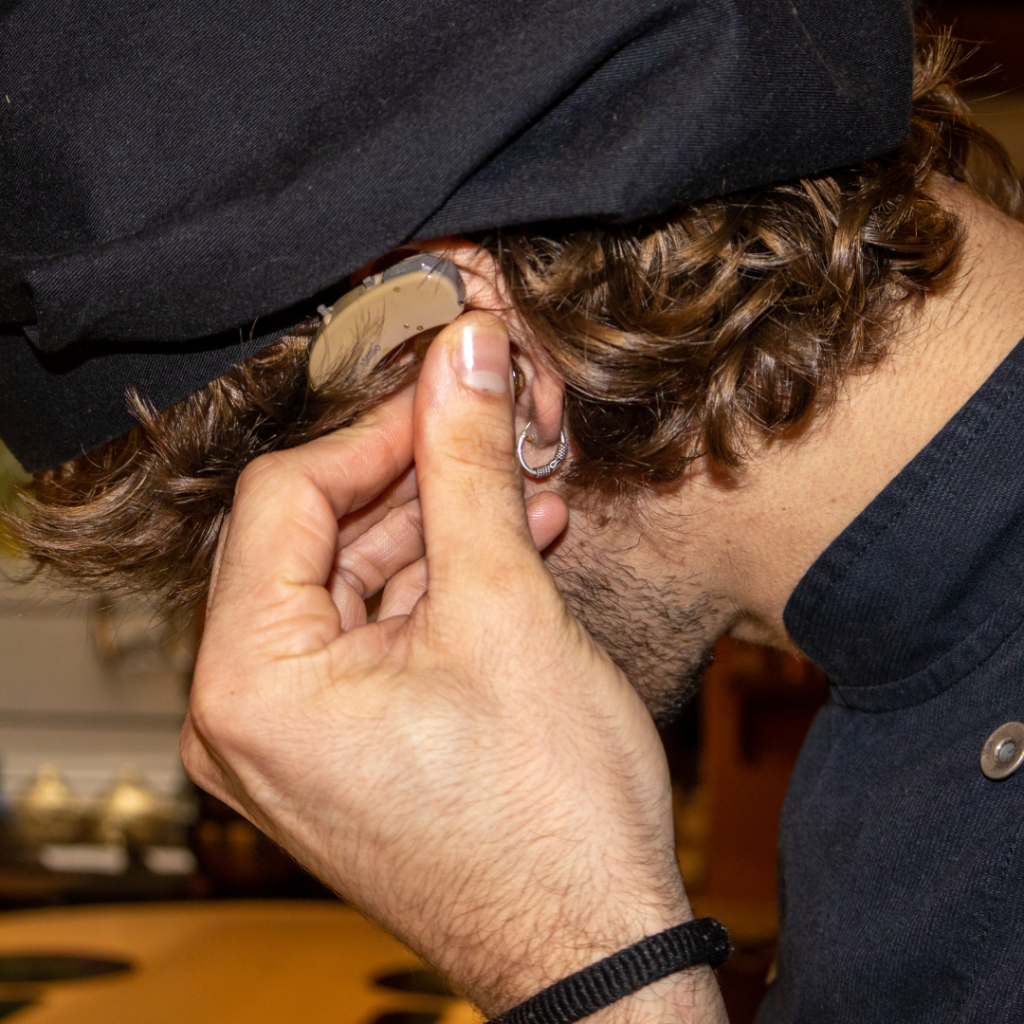
Modern prescription hearing aids use features such as directional microphones, digital noise reduction, and specialized listening programs to improve speech understanding in noisy environments. Some devices offer dedicated restaurant settings that help prioritize sounds coming from the direction of the person speaking.
Although these features can make conversations easier to follow, hearing aids cannot completely eliminate background noise.
Remote wireless microphones
Remote microphones can improve speech understanding by capturing a speaker’s voice directly and transmitting it to compatible hearing aids or receivers. The microphone can be worn by a conversation partner or placed on a table during small group discussions.
This technology helps reduce the effects of distance and competing background sounds.
Other assistive listening solutions
Depending on your hearing needs and device compatibility, additional options may include:
- Table microphones designed to capture conversations during group dining.
- Telecoil technology that connects compatible hearing devices to public hearing loop systems.
- Smartphone speech-to-text applications that convert spoken conversations into captions.
- Live-captioning features available on compatible smartphones and devices.
- Compatible wireless accessories that improve access to speech in challenging environments.
Our audiology team can help you understand available technologies, check device compatibility, and determine which solutions best support your communication needs.
Professional Audiological Solutions for Loud Listening Environments
Difficulty understanding speech in noisy environments should not be overlooked simply because you can hear normally in quiet settings.
A comprehensive hearing evaluation can help identify the factors affecting your ability to follow conversations. Depending on your symptoms and medical history, your audiologist may recommend pure-tone audiometry, middle-ear testing, speech recognition assessments, and speech-in-noise testing.
If additional auditory processing concerns are suspected, further assessment or specialist referral may be recommended.
Treatment and management options depend on the underlying cause. These may include prescription hearing aids, assistive listening devices, communication strategies, or other individualized recommendations.
If you experience sudden hearing loss, particularly in one ear, seek prompt medical evaluation rather than waiting for a routine appointment.
Identifying the underlying cause of your listening difficulties is an important step toward improving communication and enjoying social activities with greater confidence.
Schedule a Hearing Evaluation With Us Today
If following dinner conversations leaves you feeling frustrated, mentally exhausted, or frequently asking others to repeat themselves, it may be time to have your hearing evaluated.
Our audiology team can assess your hearing abilities, identify potential causes of difficulty understanding speech in noisy environments, and recommend personalized solutions. Whether you may benefit from prescription hearing aids, assistive listening technology, or practical communication strategies, we can help you explore appropriate options.
Contact our audiology office today to schedule a comprehensive hearing evaluation and take the next step toward more comfortable, confident conversations.