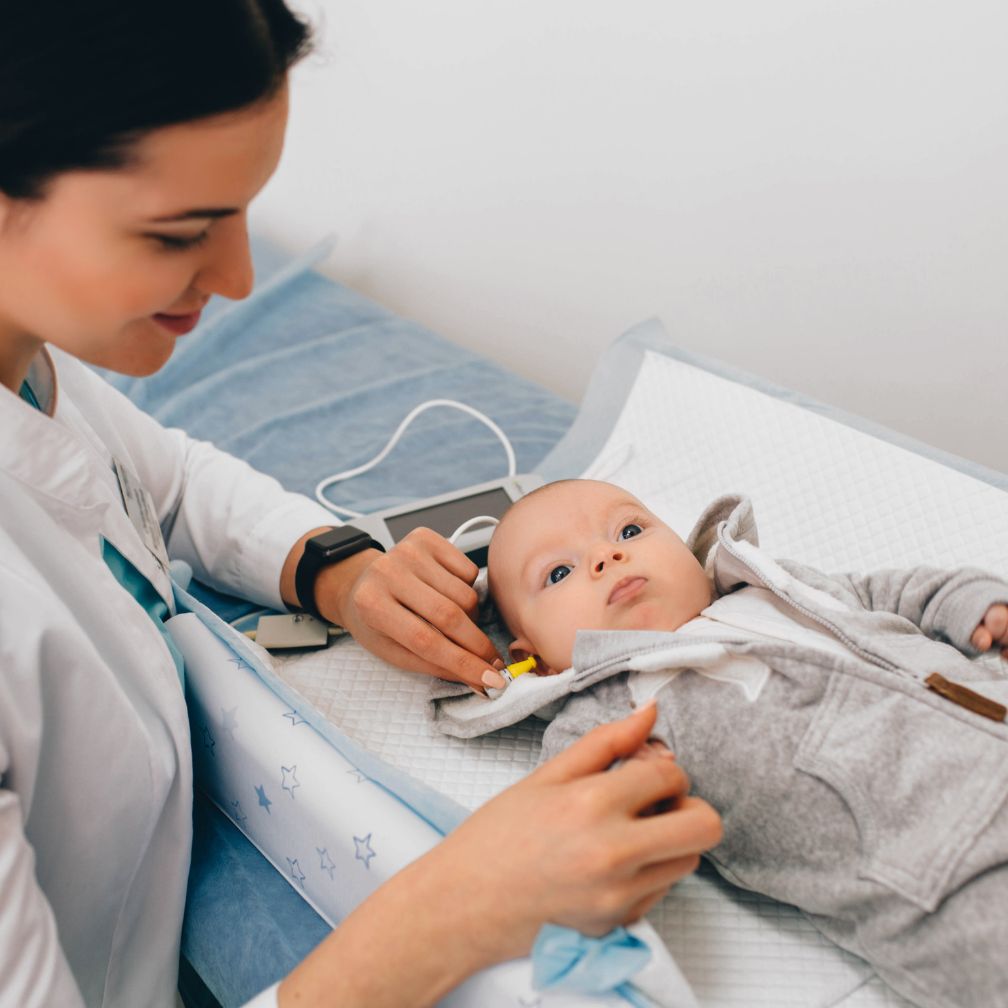
For guardians caring for an infant, recognizing that their infant suffers hearing impairment can trigger overwhelming feelings of anxiety. However, the encouraging reality remains: through prompt screening and early care, infants with auditory challenges can realize remarkable achievements. Without question, these babies can construct speech patterns, relational abilities, and robust connections with their society, experiencing a wonderful life!
Deploying specialized hearing aids alongside advanced cochlear devices offers two highly effective clinical instruments for supporting infants with hearing deficits. Further down, we explore how both instruments operate to enable you to choose which option best serves your youngster.
Grasping the Basics of Pediatric Hearing Loss
Early hearing loss in young infants can emerge as a result of various root causes, such as:
- Spontaneous genetic mutations (even across households showing zero background of impairment)
- Primary maternal congenital infections like cytomegalovirus (CMV) or rubella
- Birth-related trauma, featuring neonate oxygen loss or early delivery
- Particular ototoxic pharmaceuticals applied inside specialized neonatal units
What matters above all else? Early diagnosis. For these reasons, infants in United States hospitals complete hearing screening protocols prior to hospital discharge. Pediatric audiology specialists consistently follow the standardized “1-3-6” operational timeline:
- Screened by 1 month
- Formal comprehensive diagnosis established prior to 3 months of age
- Intervention (with hearing devices or therapy) started within 6 months of age
Achieving these explicit timeline goals grants infants their best chance at healthy speech, verbal communication, and brain development. Should you require assistance surrounding these screening procedures, your pediatrician will be happy to help!
Hearing Aids for Infants
In supporting babies who exhibit mild to severe hearing deficits, specialized hearing aids usually function as the primary intervention. Such lightweight, wearable tools boost overall volume levels, helping infants pick up human speech and natural environmental sounds with clarity.
Specialized infant-adapted hearing aids serve as:
- Completely safe for newborn infants only a few weeks after birth
- Crafted featuring soft, skin-friendly ear inserts that adjust as the child grows
- Built featuring child-proof battery covers and dedicated pediatric safety elements
- Precisely adjusted by a specialized pediatric audiologist to fit your infant’s precise diagnostic profile
Throughout early childhood growth, these devices demand ongoing professional tuning to guarantee ideal ear-canal fit and maximum performance.
Cochlear Implants in Infant Auditory Care
If a child experiences severe to profound sensorineural hearing loss and fails to show adequate progress with standard hearing aids, a cochlear implant may be advised. In distinction from standard acoustic hearing devices, cochlear implants:
- Call for precise surgical installation directly into the auditory system
- Route directly past damaged cells within the inner ear apparatus
- Convert acoustic waves into precise electrical signals that directly excite the hearing nerve
Advanced cochlear implant devices serve as:
- FDA-approved for young children aged 9 to 12 months and older
- Uniquely successful when paired with early intervention and consistent family engagement
- Prescribed solely after exhaustive clinical assessments by an expert audiologist and ENT surgeon
This process includes diagnostic imaging, specialized auditory testing, and open dialogue concerning long-term communicative results.
Hearing Aids vs. Cochlear Implants: What’s the Difference?
- Mild to severe auditory decline uses Hearing Aids; Severe to profound hearing impairment calls for Cochlear Implants
- Non-Invasive external fitting: Hearing Aids; Invasive surgical procedure: Cochlear Implants
- Acoustic sound amplification: Hearing Aids; Direct electrical signal generation: Cochlear Implants
- Starts at Infancy: Hearing Aids; Placement starts at 9-12 months: Cochlear Implants
Final Conclusions: Selecting the Right Path for Your Infant
If your newborn faces a confirmed hearing impairment diagnosis, remember that proven treatment choices and plenty of support. By partnering with skilled pediatric auditory specialists, many young children achieve communication skills that mirror those of their age group.
No matter if your infant proves better suited for conventional hearing aids or advanced cochlear implants, prompt intervention delivers permanent lifelong benefits.
Have you got specific questions concerning your newborn’s hearing abilities? Contact our staff today to arrange a comprehensive evaluation and customized treatment program.